
Not a concert film.
A portrait of
what happens before.
The film is not primarily about the concert. It is about what happens between people while they attempt to make music together.
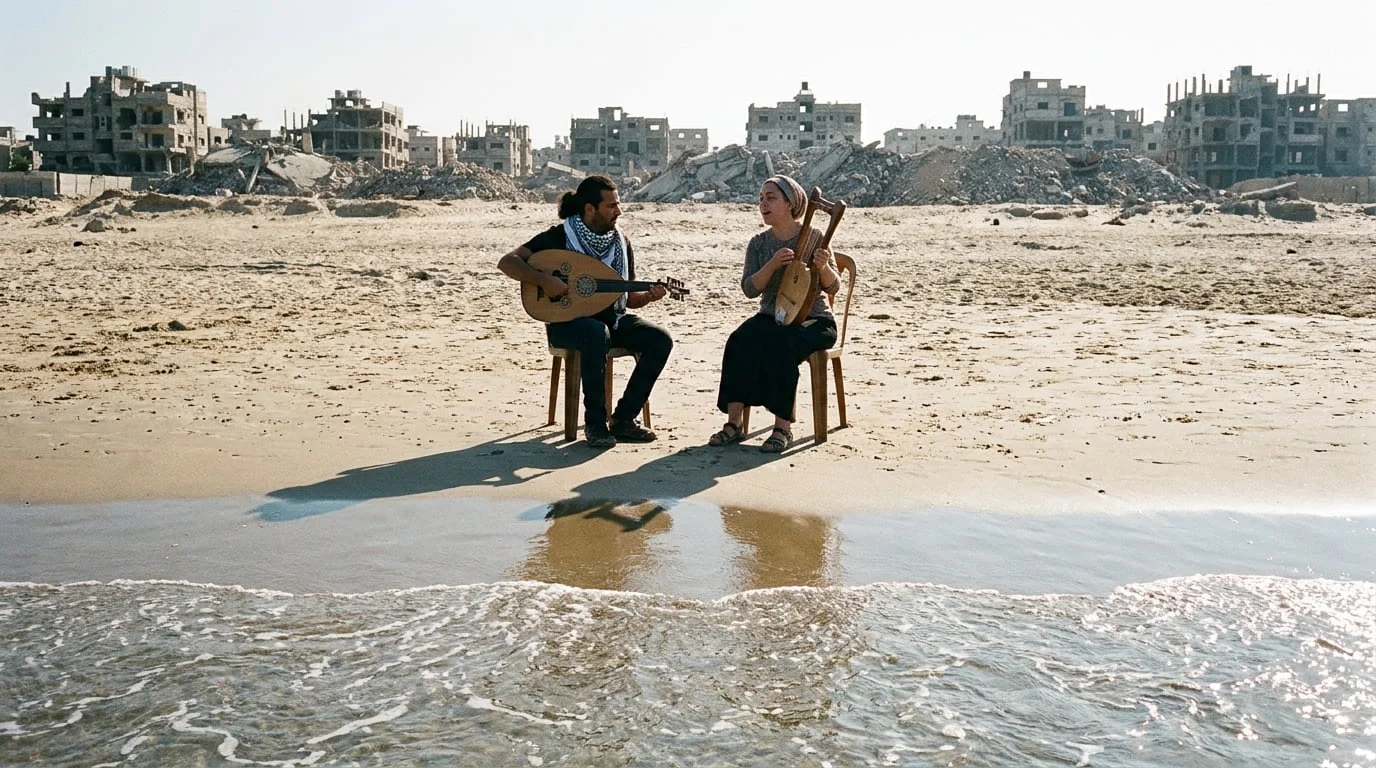
Every Accordi di Pace encounter generates a documentary work as a parallel artistic practice. Not a record of a performance, and not a promotional film for an institution — but an observational portrait of a temporary shared life: the arrival, the silence, the meals, the misunderstandings, the listening, the discovery, the risk, and the final improvisation witnessed for the first time.
The documentary must be capable of witnessing awkwardness, humour, disagreement, silence and artistic failure without forcing the material into a predetermined narrative of reconciliation. If the encounter fails, the film witnesses the failure. If something unexpected happens, the film follows it.
The camera observes the encounter. It never replaces it.
What this film is.
What it is not.
The clearest way to describe the documentary is to say what it refuses to be. These refusals are not aesthetic preferences — they are ethical commitments that protect both the encounter and the people inside it.
Ten movements.
From arrival to aftermath.
Before the meeting
Who are these people? Why did they agree? What does participation mean to them?
Arrival
Separate worlds entering the same physical space for the first time.
First encounter
Awkwardness, courtesy, uncertainty, first impressions — unscripted.
Shared life
Food, domestic space, conversation, humour and silence. The material of trust.
First sounds
The first musical exchange. The first attempt to listen across difference.
Friction
Differences, misunderstandings, hesitation, correction, resistance. The film does not avoid this.
Discovery
Moments when the musicians begin responding intuitively to one another.
Witness
The gradual transition from private encounter to observed encounter.
Performance
The public musical arc and final improvisation — witnessed once, unrepeatable.
Aftermath
The meal after. Departure. Individual reflections. What remains months later.
Observe before asking.
Follow before shaping.
- The camera observes the encounter but must never compromise the participants' ability to experience it.
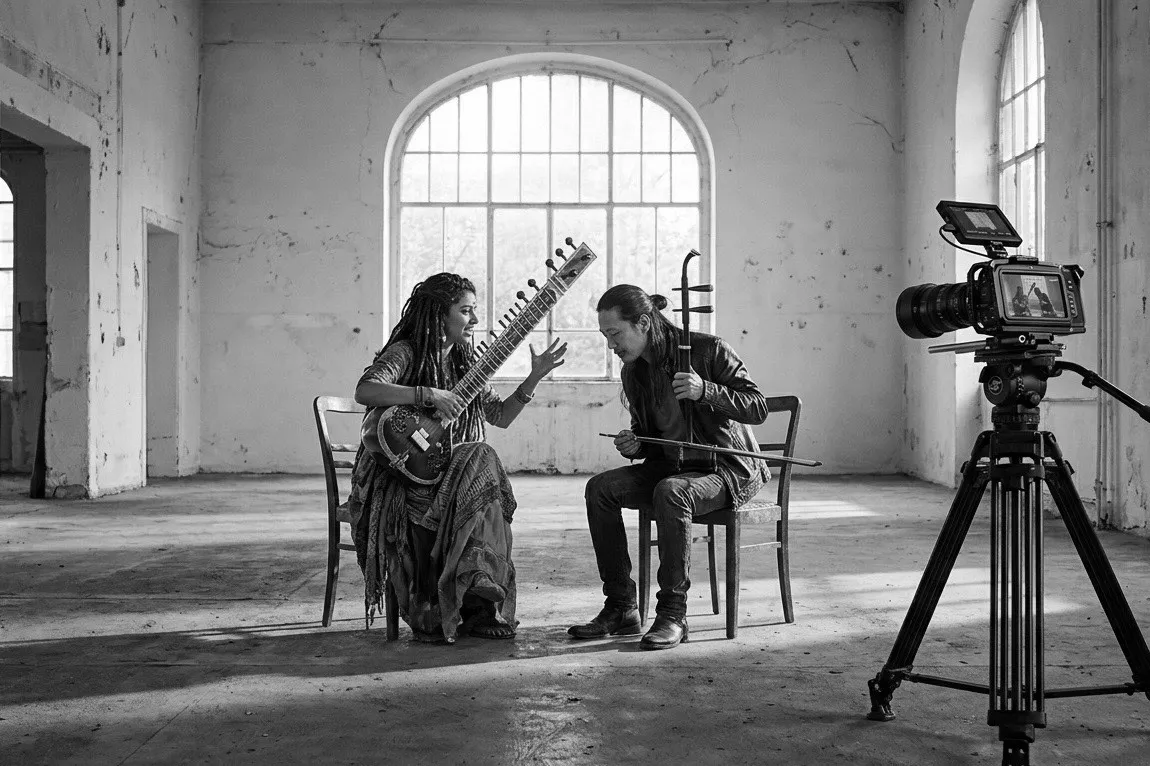
- Observe before asking. Let moments develop rather than interrupting them to explain them.
- Allow silence to remain in the film. Silence is not dead time — it is the material of listening.
- Use distance when closeness would alter the encounter. Let the musicians forget the camera exists whenever possible.
- As familiarity increases, documentary intervention decreases. The crew becomes quieter and more observational as the encounter deepens.
- Sound is a primary artistic asset. Music, breathing, room tone, footsteps, kitchen sounds and silence are central to the film — not background.
- The filmmaker retains authorship of the film. The participants retain dignity, informed consent and defined boundaries.
- If the encounter fails, the film witnesses the failure. Pre-scripted reconciliation is not the subject.
Co-produce
the film.
Each Accordi di Pace encounter generates a standalone documentary work — and a body of material that contributes to a growing archive. The long-term vision is a documentary series and a professional audio archive that outlives any single encounter.
We are seeking documentary producers, directors and broadcasters who understand the encounter as a parallel artistic work, and who have the capacity and ambition to bring it to wider audiences — through cinema, broadcast, streaming, or festival distribution.
The first documentary will be produced alongside the pilot encounter. Conversations with potential partners are open now.
Get in touch →