
From encounter
to European platform.
Five encounters were realised in Rome in 2016. They established the artistic foundation. The methodology was tested, the archive was built, and the proposition was demonstrated: two musicians from communities shaped by conflict, given shared time and space, can arrive at something genuinely unrepeatable.
The next stage is not a departure from that foundation. It is its maturation — into a residential methodology, professional documentary practice, research collaboration, and a network of European institutions able to host and sustain future encounters.
Build the institution around the encounter — never the encounter around the institution.
This is the principle that has shaped Accordi di Pace from the beginning, and it is the principle that will shape every decision about what comes next. Production, research, partnerships and funding exist for one reason: to protect the artistic simplicity of the meeting.
Accordi di Pace is not seeking a single institution to fund a concert. It is building a consortium of complementary partners around a repeatable artistic methodology — one that can be hosted across different European contexts, documented over time, and studied as a model for what sustained artistic encounter can produce.
The historical foundation matters. The five encounters already completed give any future proposal an existing artistic track record rather than a purely hypothetical concept.
Three stages.
One evolving platform.
The development of Accordi di Pace follows a clear arc — from a single pilot encounter to a recurring European programme to a sustained transnational platform. Each stage builds directly on the last and generates the evidence needed to support the next.
One residential encounter. The methodology, tested.
A professionally produced two-person residential encounter of four to five days. This is the proof-of-concept for the new methodology — longer, more spacious, and more fully documented than the 2016 format. What it produces artistically and institutionally will inform everything that follows.
The pilot proves whether the residential model produces richer encounters than the historical concert-only format; what production conditions are truly necessary; and what institutional partners need to support repetition.
- One sustained artistic encounter and public performance
- Final improvisation, professionally recorded in multitrack
- Documentary footage and a finished short or medium-form film
- Full photographic and archival record
- Post-encounter artist reflections
- Documented methodology evaluation
Three to five encounters. A comparative archive.
Three to five encounters over approximately 18 to 24 months, hosted through more than one institutional relationship. This stage establishes repeatability and begins to create comparative knowledge: what changes across different pairings, contexts, and venues; what remains constant.
At this stage, the documentary works become interconnected. Research partnerships deepen. The encounter begins to be understood not as a one-off event but as a transferable practice.
- Multiple residential encounters across European contexts
- Interconnected documentary works or a documentary series
- Professional recordings and growing archive
- Research partnership and comparative methodology
- Witness and educational programmes
- European co-host relationships established
A sustained transnational artistic research structure.
A durable European platform built around recurring encounters and a larger residency laboratory. At this stage, Accordi di Pace functions not as an event series dependent on a single founder or venue, but as a transnational institution with governance, partnerships, and long-term funding that does not require reinvention for each encounter.
The long-term goal is not to create a larger festival. It is to create an enduring platform that can host, document, study and circulate artistic encounters across Europe and beyond.
- Recurring residency programme across multiple countries
- Research and academic network
- Education and community programmes
- Documentary and audio archive for distribution
- Artist development and future commissions
- Institutional governance and sustainable funding structure
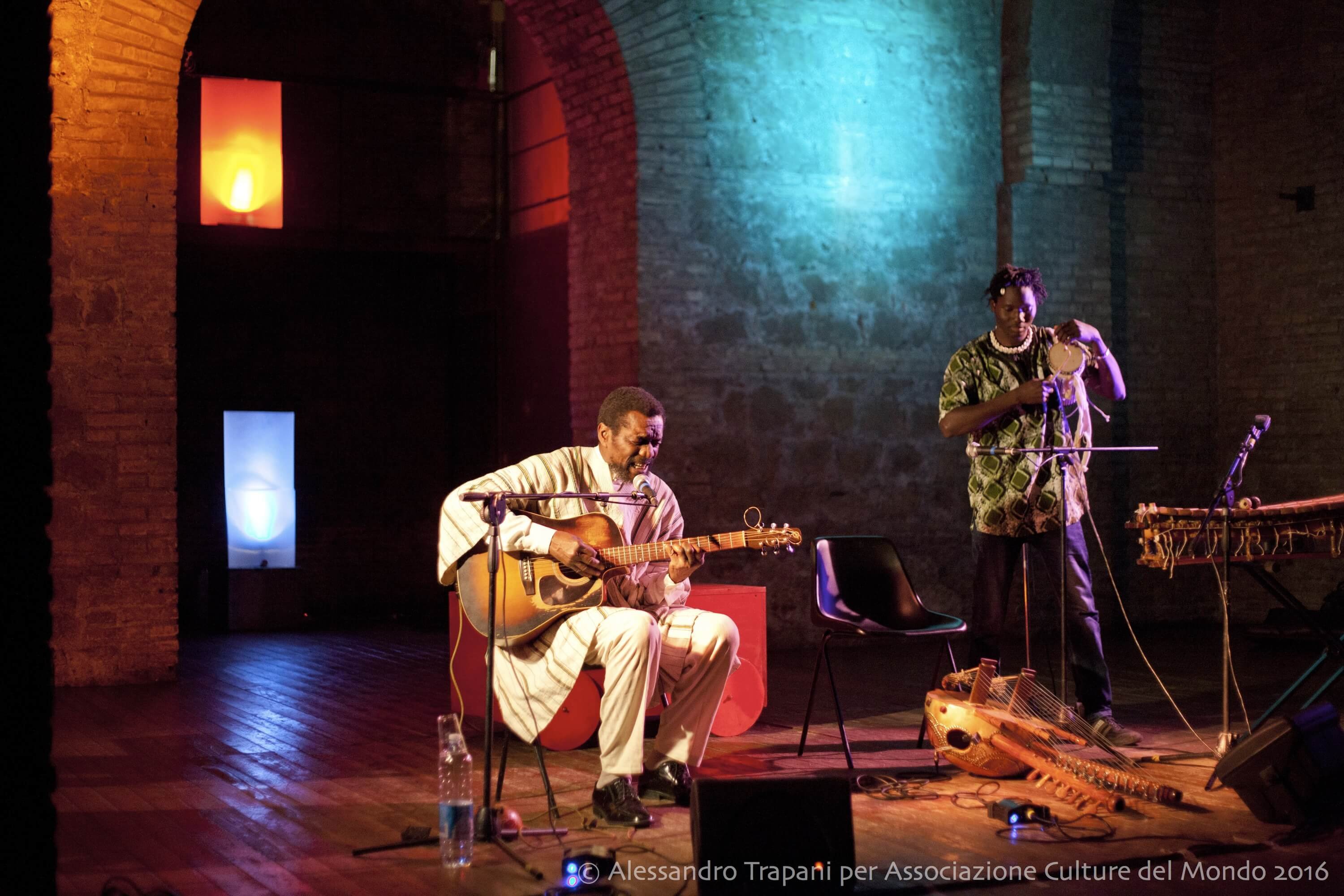 ©Alessandro Trapani per Associazione Culture del Mondo 2016
Five ways to be part of what comes next.
Exceptional musicians working across traditions shaped by difficult histories, with the curiosity and generosity to enter another musical language without knowing what will emerge.
Cultural organisations, conservatories, theatres and festivals able to host or co-produce a residential encounter — providing space, local partnership and institutional credibility.
Academics and research departments working in music, intercultural dialogue, conflict transformation or peacebuilding who see the encounter as a site of serious study.
Producers, directors and broadcasters who understand the encounter as a parallel artistic work — not a record of a concert, but a film about what happens before the public enters.
Foundations, public bodies and private supporters who want to invest in a demonstrated artistic practice with a clear development path and a European institutional horizon.
The more sophisticated the production becomes, the simpler the encounter should feel.
Every institutional structure, every partnership, every funding arrangement exists for one purpose: to give two musicians the time and space to arrive somewhere together. If the structure ever becomes visible to the artists, it has failed in its purpose.
Get in touch →