Fondazione Maitreya · Via Clementina 7 · Monti, Rome
The encounter
Two traditions. One shared room.
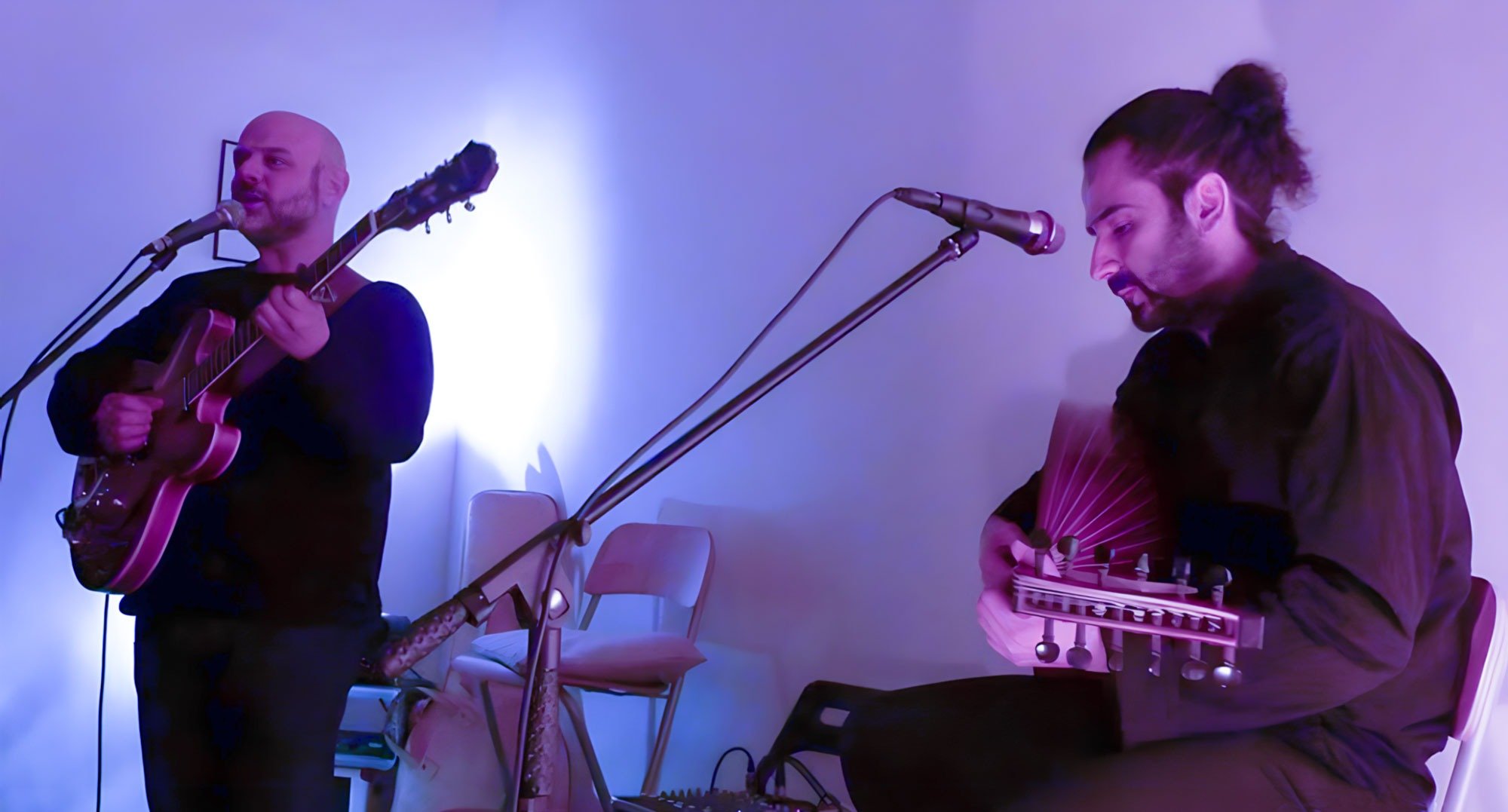
On 4 March 2016, the second Accordi di Pace concert brought Pejman Tadayon and Riccardo Manzi together at Fondazione Maitreya in Rome. Tadayon had been living in Italy for thirteen years, having left Esfahan at seventeen with the târ — the instrument he describes as the traditional guitar of Persian music.
Manzi had spent over twenty years working with Jewish musical traditions, moving between Italian songwriting, klezmer and Sephardic repertoire. They had not performed together before.
Source: artist interviews, 2016; Culture del Mondo project record.
The context
Two musical histories in one room.
The musical histories in this encounter are more complicated than a simple opposition between Persian and Jewish traditions. Iran has had a long-established Jewish community, and Persian and Jewish musical traditions share modal structures and ornamentation that predate their modern political separation.
Pejman Tadayon brought a Persian classical and Sufi musical practice formed in Iran. Riccardo Manzi brought over twenty years of Italian, klezmer and Sephardic practice. Both traditions carry histories of diaspora.
The musicians were not representatives of states or conflicts. They were two people who had each spent decades inside a musical language, entering the same room.
Source: contemporary 2016 programme; artist biographies and interviews.
Where they come from
A locator rather than a political map. Tadayon's interview identifies Esfahan, Iran as his musical origin; Manzi's Sephardic and Yiddish practice was formed in Rome and the wider Mediterranean diaspora.
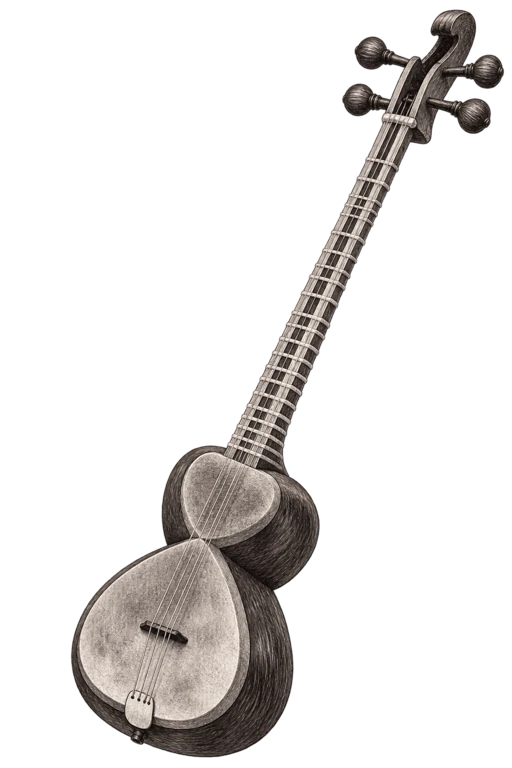
The târ is the principal plucked string instrument of Persian classical music — a double-bowl lute with a distinctive waisted shape and metal strings. Its moveable frets allow precise microtonal tuning essential to the Persian radif (classical repertoire). The setâr is its smaller relative, with a more intimate, contemplative sound closely associated with Sufi practice.
Pejman Tadayon began studying the târ at seventeen in Esfahan. He also plays the oud and teaches Eastern music theory.
Riccardo Manzi
Guitar · voice
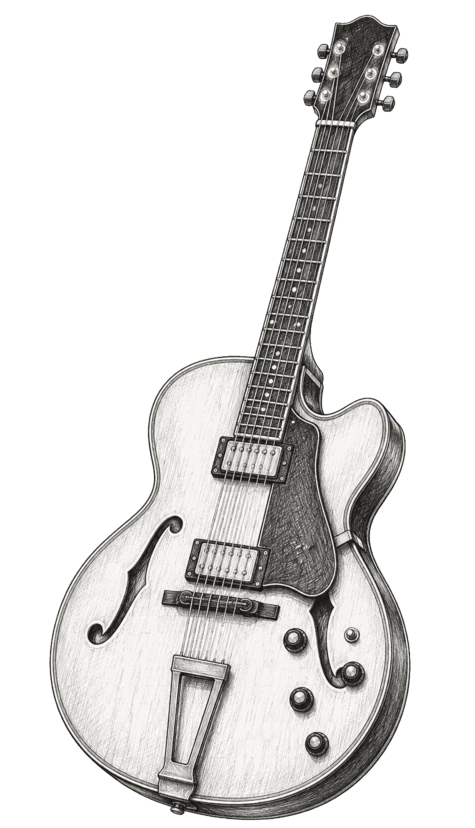
Riccardo Manzi describes a lifelong passion for strings and for the guitar as a vehicle across musical languages — Italian songwriting, klezmer, Sephardic and world music. He performed Sephardic melodies and songs in Yiddish during the encounter.
His interview describes discovering the guitar's expressive range through the klezmer and Sephardic repertoire of KlezRoym, the group he co-founded with Gabriele Coen.
Instrument descriptions distinguish documented musical practice from claims about the exact instrumentation of the 2016 performance.
The music
Two traditions that share more than either expected.
Persian classical music and the Sephardic tradition are not as distant as their modern political contexts suggest. Both descend from the same ancient Mediterranean and Middle Eastern world — sharing modal scales, ornamentation, and a common feeling for the relationship between melody and voice. The music played on 4 March 2016 was a demonstration of that shared inheritance.
Pejman Tadayon — Introduction to Persian classical music00:00
Context & Meaning
Pejman Tadayon opens the evening by speaking about his instrument and his musical tradition. The târ — which he describes as the traditional guitar of Persian music — is his primary vehicle. He left Esfahan at seventeen, carrying the instrument with him to Italy, and has spent the years since teaching Persian classical music theory and performing across Rome.
Persian classical music is organised around the radif — a vast repertoire of modal melodies preserved through oral transmission across generations. Each mode (dastgah) carries its own emotional and spiritual character: some are associated with joy, others with longing, grief, or the contemplative states of Sufi devotion.
When Pejman speaks about his music, he is describing a tradition that is simultaneously a technical discipline and a spiritual practice — one in which the performer must not merely execute notes but inhabit a particular feeling that the music is designed to evoke.
On Peace · In his own words
"Pace è molto semplice — pace sarebbe il dialogo."
Audio documentation · Fondazione Maitreya, Rome · 4 March 2016. English transcript: editorial translation from the Italian.
Pejman Tadayon — Târ · Persian classical music demonstration00:00
About this recording
Pejman plays the târ to demonstrate the characteristic sound and technique of Persian classical music. What you hear is not a fixed composition but an exploration of a particular dastgah (modal framework) — the kind of improvised elaboration that lies at the heart of Persian performance practice.
The târ's metal strings and moveable frets allow Pejman to produce the microtonal intervals — the subtle notes between the notes of a Western scale — that give Persian music its unmistakeable quality of inwardness and emotional precision. The same intervals appear, in different guises, in the Sephardic and Yiddish repertoire that Riccardo Manzi brought to the same room that evening.
Both traditions descend from the same ancient world: the modes of Persian and Jewish music share common ancestors in the medieval musical cultures of the Mediterranean, the Middle East, and Andalusia.
Sung Text · Rumi Ghazal 2131
Persian Script
بیات رها کن، غم عشقان
دیوانه شو، دیوانه شو
من در دل آتشلر آشان
پروانه شو، پروانه شو
Transliteration · Pronunciation
Biya tar-e-hā kon, gham-e-eshqān
Divāneh sho, divāneh sho
Man dar del-e-ātash-lar āshān
Parvāneh sho, parvāneh sho
English Translation
Come, let go of the sorrows of lovers,
Become mad, become mad.
I am in the heart of the flames, nesting—
Become a moth, become a moth.
The poem & its tradition
This is a passage from Ghazal 2131 in the Divan-e Shams-e Tabrizi (The Collected Poems of Shams of Tabriz), the spiritual poetry of Jalal al-Din Muhammad Rumi (1207–1273), the legendary Persian Sufi mystic and founder of the Mevlevi Order.
The poem is a deeply mystical call to spiritual transformation. The opening line originally reads "Heilat raha kon, asheqa" — "Abandon your cunning/tricks, O lover" — and urges the seeker to shed the calculations of the ego, plunge into the fire of divine love, and become like a moth drawn irresistibly to the flame. In Sufi tradition, the moth represents the human soul surrendering itself to the infinite light of divine reality.
Because of its powerful rhythm and profound mysticism, this poem has become a staple in Persian classical and traditional music for centuries, having been adapted and recorded by generations of iconic Iranian artists including Shahram Nazeri and various traditional and contemporary ensembles. Pejman performing it with the traditional târ — using bow technique — places his voice and instrument squarely within that deep classical and spiritual heritage.
Audio documentation · Fondazione Maitreya, Rome · 4 March 2016. Persian classical music: improvisation within the radif tradition. Poem: Jalal al-Din Muhammad Rumi, Divan-e Shams-e Tabrizi, Ghazal 2131. English translation: editorial adaptation. The text represents a well-established musical and poetic transmission across Persian classical tradition.
Pejman Tadayon — On peace and musical dialogue00:00
On Peace · In his own words
"Quando due musicisti di due culture diverse suonano insieme, in realtà non hanno bisogno della lingua — lì nasce una magia e è il miglior esempio della pace."
"When two musicians from two different cultures play together, they don't need language — there a magic is born, and it is the best example of peace."
Pejman speaks about what happens when two musicians from different cultures share a stage. For him, the central fact is that music renders language unnecessary. The encounter does not require translation because music is already its own form of communication — precise, emotional, immediate.
He defines peace as dialogue: the simplest and most direct description he can give. And in the act of two musicians playing together — without needing a common spoken language — he sees that definition enacted in real time. The magic he describes is not metaphorical. It was present in the room that evening.
Verbatim Italian transcription from the 2016 video documentation. English translation: editorial translation. Audio documentation · Fondazione Maitreya, Rome · 4 March 2016.
Riccardo Manzi — Morenica · Guitar and voice00:00
Context & Meaning
Riccardo introduces this piece in his own words: "Questa è una melodia sefardita, quindi ebraico-spagnola come origini. E ho aggiunto un testo in romanesco perché sentivo molto vicino questo modo di suonare il Mediterraneo a quella che è la cultura nostra di Roma."
"This is a Sephardic melody, so of Hebrew-Spanish origins. And I added lyrics in Romanesco [the Roman dialect] because I felt this way of playing the Mediterranean was very close to our own culture here in Rome."
The underlying melody is "Morenica" (Morenica alta y graciosa) — one of the most celebrated traditional songs of the Sephardic diaspora, historically preserved by Spanish-speaking Jewish communities after their expulsion from the Iberian Peninsula in 1492. The song is traditionally sung in Ladino (Judeo-Spanish). Riccardo Manzi and his group KlezRoym recorded an acclaimed version of "Morenica" on their 2000 album Scené.
What Riccardo performs here is a unique act of cross-cultural composition: he takes the ancient Sephardic melody and sets it to original lyrics he wrote in Romanesco — the Roman vernacular dialect — bridging the Mediterranean/Iberian roots of the music with the local poetic voice of Rome. The ancient Sephardic tune becomes a contemporary Roman love song, without either tradition losing itself in the process.
Lyrics
Romanesco · Riccardo Manzi
Quando l'ho vista tutta
abbracciicata all'altro
mai so' rimasto al mondo
più solo de così.
Quando, quando me trovo 'n faccia
l'ombra de le tue man
mai so' rimasto al mondo
felice de così.
Me butto ne' tuoi occhi
sarà ti' come 'l mare
mai c'era stato un sogno
più azzuro de così.
La bocca tua che ride
me pare na canzone
mai ch'ho assaggiato amore
più amore de così.
English
When I saw her fully
embraced by the other,
never have I remained in the world
more alone than this.
When, when I find before me
the shadow of your hands,
never have I remained in the world
happier than this.
I throw myself into your eyes,
it will be for you like the sea,
never had there been a dream
more azure than this.
Your laughing mouth
seems like a song to me,
never have I tasted love
more loving than this.
Audio documentation · Fondazione Maitreya, Rome · 4 March 2016. Underlying melody: "Morenica" (traditional Sephardic / Ladino, origin pre-1492). Romanesco lyrics: original text by Riccardo Manzi. English translation of Romanesco lyrics: editorial translation.
Riccardo Manzi — Tum Balalaika · Guitar and voice00:00
Context & Meaning
"Tum Balalaika" is one of the most beloved traditional Yiddish folk and love songs of Eastern European Ashkenazi origin. It opens with a spoken introduction that sets the scene: a young man standing awake through the night, wondering whom he should choose to marry without causing shame.
Structurally, the song is a riddle song: in its full form, the young man tests a young woman's intelligence and character with a series of poetic, existential riddles — what can grow without rain? What can burn without ending? What can weep without tears? The woman answers each riddle with swift intelligence (a stone grows without rain; true love burns without ending; a heart weeps without tears), proving herself worthy.
The title's chorus — Tum-balala, tum-balala, tumbalalaika — plays on the word balalaika (the traditional Russian stringed instrument) using celebratory nonsense syllables to create a mood of festivity and courtship. The song is a staple of the Klezmer repertoire and has been recorded and performed globally across generations as a symbol of communal joy, the wisdom of women, and cultural continuity.
Lyrics
Yiddish · Spoken introduction + chorus
Spoken introduction:
"Shteyt a bokher, shteyt un tracht,
tracht un tracht a ganze nacht.
Vem tsu nemen un nit farshemen,
vem tsu nemen un nit farshemen."
Tumbalala, tumbalala, tumbalalaika!
Tumbalala, tumbalala, tumbalalaika!
Tumbalalaika, shpil balalaika,
tumbalalaika, fraylekh zol zayn.
English
Spoken introduction:
"A young man stands, stands and thinks,
thinks and thinks the whole night.
Whom to choose and not put to shame,
whom to choose and not put to shame."
Tumbalala, tumbalala, tumbalalaika!
Tumbalala, tumbalala, tumbalalaika!
Tumbalalaika, play, balalaika,
tumbalalaika, let it be joyful.
On Peace · In his own words
"Forse piano piano, imparando da questa modalità, si può arrivare a una pace reale."
"Perhaps slowly, slowly, learning from this way, one can arrive at a real peace."
Audio documentation · Fondazione Maitreya, Rome · 4 March 2016. "Tum Balalaika": traditional Yiddish folk song, Eastern European Ashkenazi origin, composer unknown. A staple of the Klezmer repertoire.
Riccardo Manzi — Arum Dem Fayer · Guitar and voice00:00
Context & Meaning
"Arum Dem Fayer" (Around the Fire) is a traditional Yiddish folk song rooted in the culture of Eastern European Jewish communities. It describes people gathered around a fire — singing, dancing, keeping warm together — in the collective spirit that fire has always symbolised across cultures: community, continuity, and the human need for warmth against the dark.
The song belongs to the broader body of Yiddish folk music that Riccardo Manzi has spent over two decades studying, performing and transmitting as part of KlezRoym, the Rome-based klezmer ensemble he co-founded. That a Roman musician devoted his life to preserving the musical memory of Eastern European Jewish communities is itself a form of cultural coexistence — one that predates and in some ways mirrors what Accordi di Pace was attempting to create.
The image of people gathering around a fire — warming themselves together, regardless of origin — carries a particular resonance in a concert that brought two musicians from historically separated worlds into the same intimate room.
Lyrics
Yiddish · Transliteration
Arum dem fayer
zitsn mir ale,
zingt a lidele,
tantst a vayle.
Heyser fayer,
vareme hent,
mir zenen ale
fraynd.
English
Around the fire
we all sit together,
singing a little song,
dancing for a while.
Hot fire,
warm hands,
we are all
friends.
Audio documentation · Fondazione Maitreya, Rome · 4 March 2016. "Arum Dem Fayer": traditional Yiddish folk song, Eastern European Ashkenazi origin, composer unknown. English translation of Yiddish lyrics: editorial translation.
Riccardo Manzi — Interview on music, trust and peace00:00
On Peace · In his own words
"Diffido un po' delle scorciatoie che cercano di sottolineare che se si va d'accordo quando si suona, allora si va d'accordo per tutto. Questo evidentemente non è vero — però forse piano piano si può arrivare a una pace reale."
"I'm a little wary of shortcuts that suggest that if you get along when you play, then you get along in everything. That is clearly not true — but perhaps slowly, slowly, you can arrive at a real peace."
Riccardo's view of music and peace is the most sceptical in the Accordi di Pace archive — and the most precise. He refuses the easy claim that musical harmony translates automatically into political or human harmony. Getting along when you play does not mean you get along in everything. He knows this from experience.
But he does not dismiss the encounter. He believes something real is possible — only that it must be learned slowly, from this model, through repeated practice rather than a single evening's magic. It is a measured, long-term faith rather than an immediate one.
The tension between Pejman's direct certainty ("music is the best example of peace") and Riccardo's careful scepticism ("perhaps slowly, slowly") is one of the most honest moments in the archive. Together, they describe two truthful ways of holding the same hope.
Verbatim Italian transcription from the 2016 video documentation. English translation: editorial translation. Audio documentation · Fondazione Maitreya, Rome · 4 March 2016.
The artists
Two musicians, speaking through their instruments.
Esfahan, Iran
Pejman Tadayon
Târ · Setâr · Oud Voice · Composer · Painter
Pace è molto semplice — pace sarebbe il dialogo.
"Peace is very simple — peace would be dialogue."
Interview · March 2016
Pejman · Introduction to Persian classical music00:00
Pejman · Târ demonstration00:00
Pejman · On peace and musical dialogue00:00
Rome, Italy
Riccardo Manzi
Guitar · voice Composer · KlezRoym
Forse piano piano, imparando da questa modalità, si può arrivare a una pace reale.
"Perhaps slowly, slowly, learning from this way, one can arrive at a real peace."
Interview · March 2016
Riccardo · Morenica — Sephardic melody with Romanesco lyrics00:00
Riccardo · Tum Balalaika — Yiddish00:00
Riccardo · Arum Dem Fayer — Yiddish00:00
Riccardo · Interview on music, trust and peace00:00
The human encounter
Two musicians, two ways of speaking about peace.
After the performance, Pejman Tadayon and Riccardo Manzi described what they believed music could do. Their perspectives are different — one lyrical and direct, one careful and sceptical — and that difference is itself part of the archive.
Pejman Tadayon
Interview · Fondazione Maitreya, Rome · March 2016
For Pejman, music speaks where language fails. He describes peace as something very simple: dialogue. When dialogue is born between two different cultures — even those that feel their difference deeply — peace follows.
"Quando due musicisti di due culture diverse suonano insieme, in realtà non hanno bisogno della lingua — lì nasce una magia e è il miglior esempio della pace."
"When two musicians from two different cultures play together, they don't need language — there a magic is born, and it is the best example of peace."
Riccardo Manzi
Interview · Fondazione Maitreya, Rome · March 2016
Riccardo is more cautious. He distrusts easy claims that music automatically produces understanding. But he believes that if you take the example music offers — the possibility of communicating across difference — and learn from it slowly, something real can follow.
"Diffido un po' delle scorciatoie che cercano di sottolineare che se si va d'accordo quando si suona, allora si va d'accordo per tutto. Questo evidentemente non è vero — però forse piano piano si può arrivare a una pace reale."
"I'm a little wary of shortcuts that suggest that if you get along when you play, then you get along in everything. That is clearly not true — but perhaps slowly, slowly, you can arrive at a real peace."
Verbatim Italian transcriptions from the 2016 video documentation. English translations are editorial translations.
What emerged
Two musical languages arrived in Rome from different histories. The point was not to erase those differences, but to hear what could happen when they occupied the same room.
Original project mark · 2016
Pejman spoke of music as the best example of peace — lyrical, direct, certain. Riccardo was more measured — he distrusted shortcuts, but believed music could offer a model learned slowly. Together, their perspectives show two different ways of holding the same belief.
These testimonies were recorded after an Accordi di Pace concert. They capture what audiences experienced in the moments following an evening of musical encounter.
Audience testimony · Recording00:00
Italian
"Penso che sia un progetto molto, molto interessante, profondo e innovativo. Cioè, musiche comunque antiche che sono riusciti a renderle attuali. Quindi ho trovato molto originale l'idea."
English
"I think it's a very, very interesting, profound, and innovative project. Meaning, ancient music nonetheless that they managed to make current. So I found the idea very original."
Audience testimony · Recording00:00
Italian
"Ho trovato uno spettacolo coinvolgente, bellissimo e poi, secondo me, ha rispettato quello che noi volevamo, cioè di trovarci tutti insieme nella stessa sintonia in un momento così piacevole con dei professionisti di altissimo livello."
English
"I found the show engaging, beautiful, and then, in my opinion, it respected what we wanted—that is, to find ourselves all together in the same harmony in such a pleasant moment with professionals of the highest level."
Hear all audience testimonies from Accordi di Pace concerts
The original 2016 video teasers contain artist interviews and musical demonstrations. The source material is preserved here as part of the encounter archive.