The initiative Encounters Method Documentary Next stage
EN | IT
Get in touch
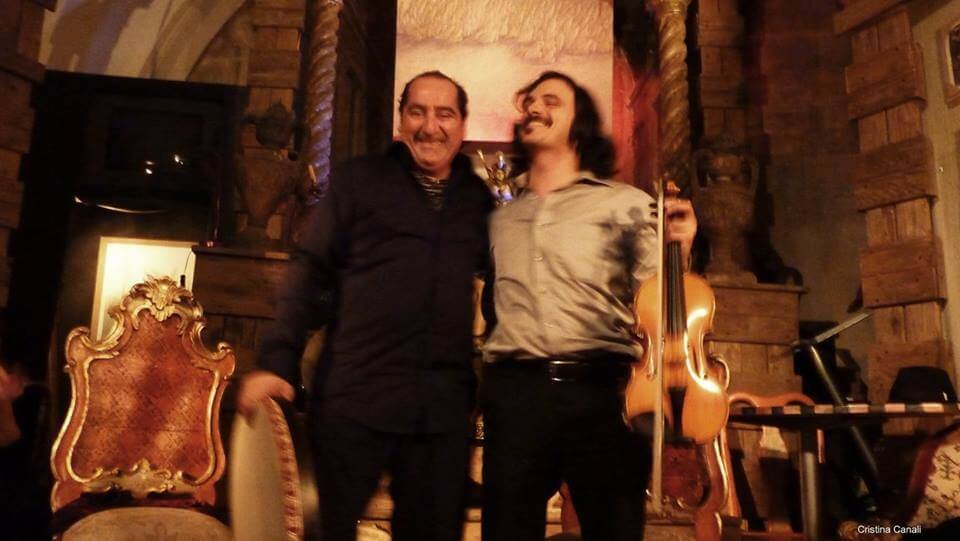
Nando Citarella and Tcha Limberger after the concert, Cappella Orsini, Rome, April 2016
Encounter 03 · 8 April 2016

Italian and Romani traditions

Cappella Orsini · Campo de' Fiori · Rome

Two traditions from different histories.

On 8 April 2016, the third Accordi di Pace concert brought Nando Citarella and Tcha Limberger together at Cappella Orsini in Campo de' Fiori, Rome — a deconsecrated chapel whose stone acoustic became part of the encounter itself.

The contemporary programme described Citarella as an interpreter of Italian and Mediterranean popular traditions and Limberger as a Romani musician and singer specialising in Manouche and Pannonian music.

Source: Culture del Mondo announcement and contemporary 2016 event record.

Italian and Romani musical worlds.

The Romani musical tradition in Europe is one of the most widely heard and least accurately understood. Tcha Limberger's practice draws on Hungarian Romani music, Manouche jazz, and the Pannonian tradition — a sophisticated musical inheritance often reduced to a generic idea of "Gypsy music."

Nando Citarella's practice is rooted in southern Italian popular tradition: tammorra, tarantella, cantastorie — a folk repertoire that carries the memory of labour, ritual and community celebration. Both traditions have been romanticised and distorted by outsiders. Both carry something specific and resistant to simplification.

The encounter placed them in the same room without asking either to become more legible to the other's audience.

Source: contemporary 2016 programme; artist biographies and archive material.

Locator map showing southern Italy and Central European Romani traditions converging on Rome

A locator rather than a political map. Citarella's musical tradition is rooted in Campania and southern Italy; Limberger's practice draws on Hungarian and Central European Romani traditions.

Nando Citarella and Tcha Limberger performing together — Nando singing on chitarra battente, Tcha on violin
Cappella Orsini · Campo de' Fiori, Rome · April 2016. Photo ©Cristina Canali.
Nando Citarella and Tcha Limberger during rehearsal — Nando on guitar, Tcha on violin, afternoon light
Tcha Limberger on guitar, black and white, during the encounter
Photographs from the Culture del Mondo archive. Images by ©Cristina Canali.
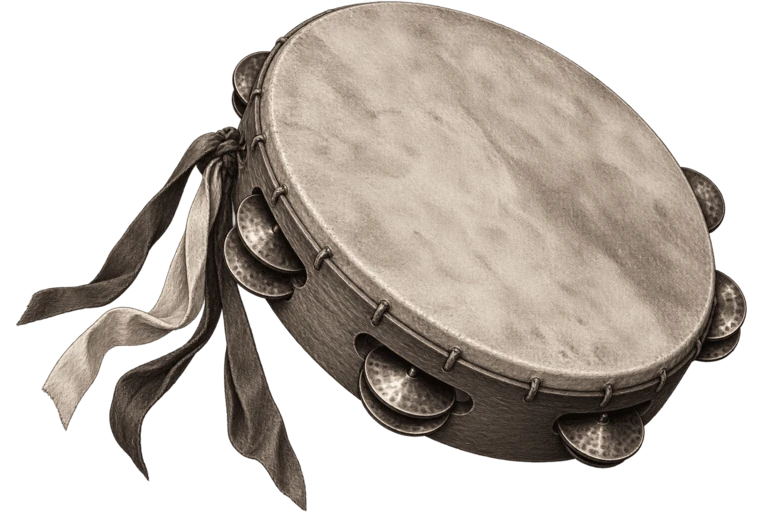
Tammorra — southern Italian frame drum
Nando Citarella

Tammorra · chitarra battente · voice

Southern Italian frame drum · flat-backed guitar · cantastorie tradition

The tammorra is a large frame drum central to the popular and ritual music of Campania and southern Italy. Played with a distinctive hand technique and paired with voice, it drives the tarantella and tammurriata — dances with deep roots in working-class and agricultural communities.

Citarella also plays the chitarra battente, a strummed flat-backed lute from the southern Italian folk tradition, and sings in the cantastorie storyteller tradition. The archive photographs show him playing both instruments during the encounter.
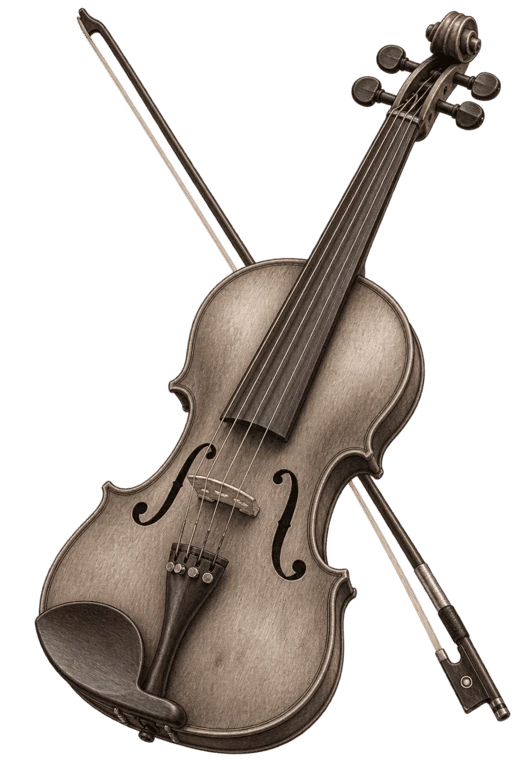
Violin — Romani musical tradition
Tcha Limberger

Violin · guitar · voice

Romani violin · Manouche · Pannonian tradition

Tcha Limberger is a multi-instrumentalist whose practice centres on violin, guitar and voice across Romani, Manouche and Central European traditions. His violin playing draws on the ornamental and improvisational language of Hungarian Romani music. The archive photographs show him moving between violin and guitar during the encounter.

He led the Budapest Gypsy Orchestra and has worked across classical, folk and improvised music throughout Europe.

Instrument descriptions distinguish documented musical practice from claims about the exact instrumentation of the 2016 performance. The archive photographs confirm both violin and guitar were played by Limberger during the encounter.

Two musicians, speaking through their instruments.

Portrait of Nando Citarella
Campania · Italy

Nando Citarella

Tammorra · chitarra battente · voice
Musician · actor · researcher

Nando Citarella is a musician, actor and researcher of southern Italian and Mediterranean popular traditions. He has worked in theatre and music since the 1970s and founded Tamburi del Vesuvio in 1994, developing a practice rooted in popular song, percussion and dance traditions. The 2016 event announcement describes him as a leading interpreter of Italian and Mediterranean popular music.

Tcha Limberger playing guitar during the encounter, Rome 2016
Bruges, Belgium · Romani traditions

Tcha Limberger

Violin · guitar · voice
Romani musician · multi-instrumentalist

Tcha Limberger is a Belgian-born Romani musician whose practice spans violin, guitar, singing and the traditional music of the Carpathian and Pannonian regions. As a teenager he became deeply involved in Hungarian music and later led the Budapest Gypsy Orchestra. The 2016 announcement identifies him as a Romani musician and singer specialising in Manouche and the music of the Pannonian Plain.

What the photographs show.

No interview documentation has been located for this encounter. What the archive does hold is an unusually rich set of photographs by Cristina Canali — images that show not only the performance but the energy in the room, the audience drawn into the music, and the two musicians at ease with each other before and after.

Before the concert

Rome · April 2016 · Source: archive photograph, ©Jacelyn Parry
Nando Citarella and Tcha Limberger playing together at home before the concert — Nando on guitar, Tcha on violin
Rome · April 2016 · Source: archive photograph, ©Jacelyn Parry

The archive includes a photograph taken before the concert — Nando Citarella on guitar, Tcha Limberger on violin, sitting together in a domestic space. They are not performing for an audience. They are playing. The afternoon light, the informality, the concentration suggest a rehearsal or a private session: two musicians finding their way toward each other before they step into the chapel.

"La musica accomuna tutti — è un linguaggio che non conosce frontiere."

"Music unites everyone — it is a language that knows no borders."

Source: Culture del Mondo event description, April 2016. No direct artist interview has been located for this encounter.

The room

Cappella Orsini · Campo de' Fiori, Rome · April 2016 · Photo ©Cristina Canali
The audience drawn into the performance, tammorra players and movement in the chapel space

The photograph of the room tells something the written record doesn't. By the end of the evening, people in the audience had picked up tambourines and were playing. The boundary between performers and listeners had dissolved. This is what Nando Citarella's tradition does — the tarantella and tammurriata are not music for watching. They are music for participating in.

"Il ritmo del tammorra non si ascolta soltanto — si sente nel corpo."

"The rhythm of the tammorra is not only heard — it is felt in the body."

Source: archive photograph, ©Cristina Canali, April 2016. No direct artist interview has been located for this encounter.

Archive note: Artist interviews for Encounter 03 have not yet been located. This section draws on the photographic archive by ©Cristina Canali and the Culture del Mondo event record. It will be updated when additional primary-source material is recovered.

One musician carried a southern Italian tradition shaped by dance, percussion and popular song. The other carried a Romani musical language shaped by violin, improvisation and the Pannonian tradition. The meeting did not require either tradition to become something else.

The photographs show what the written record suggests: a room that came alive. By the end of the evening, audience members had joined in. The tammorra is a participatory instrument — it has always brought people into the music rather than keeping them at a distance. That is what happened in the chapel.

Sources: Culture del Mondo project record; contemporary 2016 event coverage; archive photographs by ©Cristina Canali.

What audiences felt

These testimonies were recorded after an Accordi di Pace concert. They capture what audiences experienced in the moments following an evening of musical encounter.

Audience testimony · Recording 00:00
Italian

"Lo consiglio a tutti, peccato che c'erano pochi posti."

English

"I recommend it to everyone; it's a pity there were so few seats available."

Audience testimony · Recording 00:00
Italian

"Beh, è stato sicuramente emozionante, interessante. Poi ho imparato un un sacco di cose nuove sulla musica. Quindi... lo consiglio a tutti, peccato che c'erano pochi posti."

English

"Well, it was certainly emotional, interesting. Then I learned a lot of new things about the music. So... I recommend it to everyone, it's a pity there were so few seats."

Hear all audience testimonies from Accordi di Pace concerts

View all voices →

What remains.

Original promotional poster · 8 April 2016

Original promotional poster · 8 April 2016.

Nando Citarella and Tcha Limberger performing together, Cappella Orsini, April 2016

Performance · April 2016 · Photo ©Cristina Canali.

Original posterConcerto n.3 · 8 April 2016
VenueCappella Orsini · Campo de' Fiori, Rome
FormatFive intimate concerts planned from January to May 2016.
AudienceMaximum 40 participants.
Original web archiveCulture del Mondo ↗
Nando Citarella with tammorra, close-up, amber light, Cappella Orsini 2016

Photographic archive

This encounter is documented through a substantial photographic archive by Cristina Canali, including performance, rehearsal and post-concert photographs. Video documentation has not yet been located.

Photography

Archive photographs by ©Cristina Canali, April 2016. Courtesy of Culture del Mondo.

Video status

Video documentation pending — Pass 2 archive research.

Archive sources: Culture del Mondo, April 2016; original poster; photographs by ©Cristina Canali; contemporary press references.

04 · Burkina Faso and Mali

Gabin Dabiré × Zam Moustapha Dembélé

Teatro Sala Uno · Rome · 2016
Continue through the archive →